
Pool Deck Ideas: Creating Your Perfect Outdoor Oasis

Last summer, we worked with a Howard County family who’d been putting off their pool deck renovation for three years. Every time they walked out to their pool, they cringed at the cracked concrete that made their beautiful pool look tired and uninviting.
Six weeks after we finished their new travertine pool deck with built-in seating, she texted us photos from their first big pool party in years. Kids were safely running around on the slip-resistant stone, adults were lounging in the shade, and everyone kept commenting on how amazing the space looked.
For homeowners in Baltimore and surrounding counties, creating the perfect pool deck isn’t just about safety – it’s about designing a space where your family will actually want to spend time. But with so many pool deck ideas and materials available, how do you choose what’s right for your property and budget?
In this guide, we’ll explore the most popular pool deck ideas, from classic stone to modern composite materials. You’ll learn what works best for Maryland’s climate and discover design strategies that maximize both beauty and functionality.
What Are the Most Popular Pool Deck Ideas?
Popular pool deck ideas combine durable materials with functional design features that work well in Maryland’s climate. The best options balance safety, style, and long-term performance around your pool area.
Here are the top pool deck ideas we see Maryland homeowners choosing:
- Natural stone decks – Travertine, flagstone, and bluestone offer excellent heat resistance and natural beauty that complements any home style
- Composite decking with built-in features – Modern materials like Trex and Azek provide low maintenance with integrated seating, planters, and lighting options
- Paver pool decks with custom patterns – Concrete and natural stone pavers allow creative designs while providing excellent drainage and easy repairs
- Multi-level deck designs – Raised areas create separate zones for dining, lounging, and pool access while adding visual interest
- Integrated outdoor living spaces – Pool decks that flow seamlessly into outdoor kitchens, fire pits, and covered seating areas
- Stamped concrete with decorative finishes – Cost-effective option that mimics natural materials while offering slip-resistant textures
The key is choosing materials that stay cool underfoot during hot Maryland summers while providing the slip resistance and durability your family needs. Each option offers different benefits depending on your budget, maintenance preferences, and design goals.
Best Pool Deck Materials for Maryland Homes
Choosing the right material for your pool deck makes all the difference in how much you’ll enjoy your outdoor space. Living in Maryland, we deal with everything from humid summers to freeze-thaw cycles in winter, so your pool deck needs to handle it all.
We’ve installed hundreds of pool decks across Baltimore and surrounding counties, and certain materials consistently outperform others in our climate. The best pool deck materials stay cool underfoot during those 90-degree July days, resist cracking when temperatures drop, and maintain their appearance year after year.
Here’s what we’ve learned works best for Maryland homeowners, along with the real-world pros and cons of each option.
Natural Stone Options (Travertine, Flagstone, Bluestone)
 Natural stone remains our top recommendation for pool decks in Maryland. These materials have been tested by time and weather, and they just work beautifully around pools.
Travertine tops our list for pool decks. This limestone stays surprisingly cool even in direct sunlight, making it comfortable for bare feet. The natural texture provides excellent slip resistance when wet, and the neutral colors complement any home style. We source travertine that’s specifically rated for freeze-thaw resistance, which matters here in Maryland.
Flagstone offers incredible durability and a more rustic appearance. Each piece is unique, creating natural patterns that look like they’ve always belonged in your landscape. Flagstone works especially well for families who want their pool area to feel like a natural retreat rather than a formal entertainment space.
Bluestone brings a classic, sophisticated look that works beautifully with traditional Maryland architecture. This dense stone handles our weather extremes exceptionally well and develops a beautiful patina over time. One downside to bluestone is it can get hot under direct sunlight. Bluestone costs more upfront but often lasts decades with minimal maintenance.
Natural stone does require professional installation to handle properly, and initial costs run higher than manufactured options. Most of our clients tell us the investment pays off in both enjoyment and home value.
Composite Decking Benefits and Drawbacks
Composite decking has come a long way in recent years, and we’re seeing more Maryland homeowners choose materials like Trex and Azek for their pool areas. These engineered materials offer some real advantages, especially for busy families who want beautiful outdoor spaces without constant maintenance.
Azek performs exceptionally well around pools because it doesn’t absorb water, which means no warping, cracking, or splintering. This material stays relatively cool compared to traditional wood decking, though it will get warm in direct sunlight. Azek comes in dozens of colors and finishes, including options that look remarkably like real wood grain.
Trex offers similar benefits at a lower price point. The newer Trex lines resist fading and staining much better than earlier generations. We’ve installed Trex pool decks that still look great after 10+ years with just basic cleaning.
Both materials work well for multi-level pool deck designs because they’re lighter than stone and easier to work with for elevated structures. You can integrate built-in benches, planters, and lighting directly into the decking system.
The trade-offs come down to feel and cost. Composite materials never quite match the natural coolness of stone on hot days. They also expand and contract with temperature changes, which requires careful installation techniques. Installation costs often run similar to natural stone once you factor in proper framing and ventilation requirements.
We’ve had great success combining composite decking with stone elements – using stone around the pool edge where people walk barefoot and composite for elevated seating areas.
Concrete and Paver Solutions
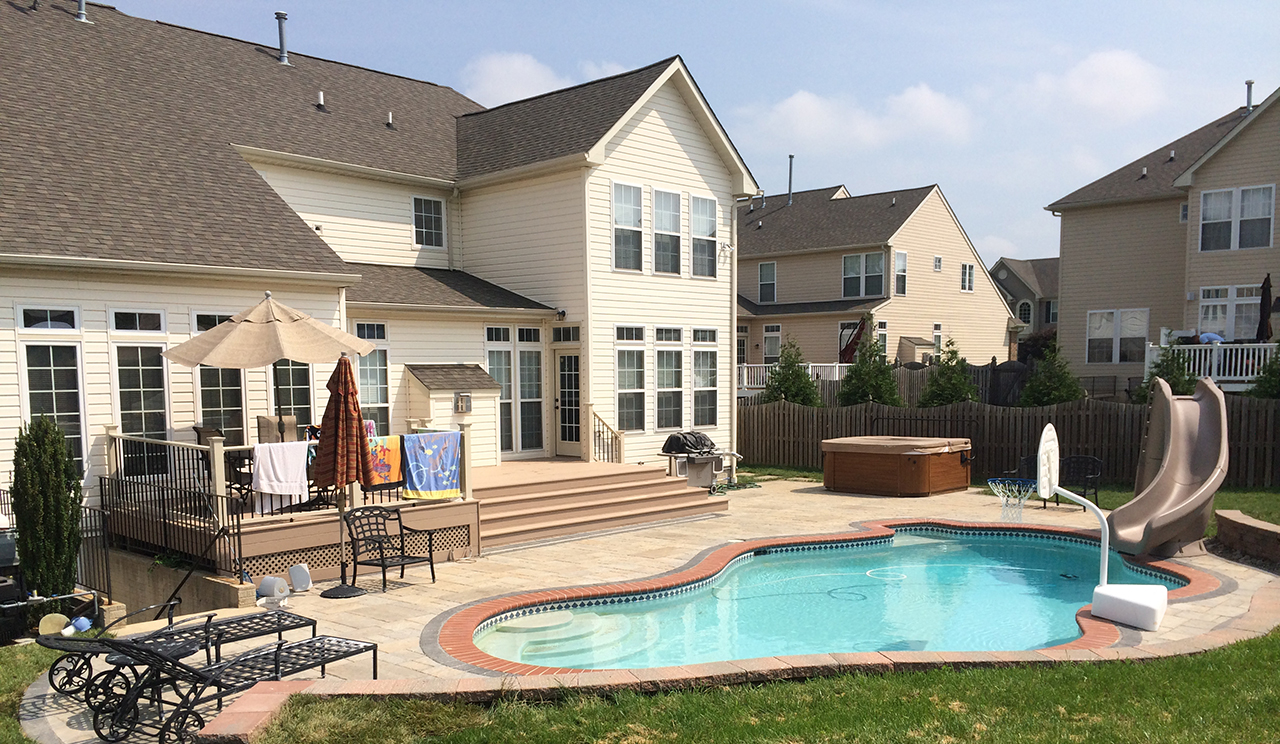 Concrete and paver options give you the most flexibility in design while working within almost any budget. We’ve created stunning pool decks using both traditional concrete and various paver systems, each offering different benefits for Maryland homeowners.
Stamped concrete remains popular because it mimics the look of natural stone or brick at a fraction of the cost. Modern stamping techniques create realistic textures that provide good slip resistance around pools. We can add integral color during the pour or apply decorative stains afterward to match your home’s exterior. The key is using proper concrete mixes that handle our freeze-thaw cycles and adding expansion joints in the right places.
Concrete pavers offer the best of both worlds – the durability of concrete with the flexibility of individual units. If one paver gets damaged, you can replace just that piece rather than patching a large slab. Pavers also handle ground movement better than solid concrete, which matters in Maryland’s clay soils.
Natural stone pavers like granite and sandstone combine the beauty of natural materials with easier installation than large flagstone pieces. These uniform pieces create clean, geometric patterns while still providing the heat resistance and slip resistance of natural stone.
The biggest advantage of paver systems is drainage. Water flows between the joints rather than sitting on the surface, which reduces slip hazards and prevents ice formation in winter. Paver pool decks also tend to dry faster after summer storms.
Concrete solutions do require sealing every few years to maintain their appearance and weather resistance. Pavers need occasional re-leveling as the ground settles, but these maintenance tasks are straightforward and affordable.
Outdoor-Rated Porcelain Tile
Outdoor-rated porcelain tile offers a modern alternative that combines the beauty of natural materials with engineered performance. These specialized tiles stay remarkably cool underfoot even in direct sunlight – similar to travertine – while providing exceptional durability for Maryland’s freeze-thaw cycles.
Unlike traditional ceramic tiles, outdoor porcelain is designed specifically for pool environments. The colors never fade from sun exposure or pool chemicals, and the non-porous surface resists staining and requires minimal maintenance. We work with products like Landmark Ceramics’ outdoor line, which offers styles that mimic natural stone, marble, and wood.
Porcelain tile works especially well for homeowners who want a contemporary, clean-lined aesthetic. The uniform sizing creates precise geometric patterns, and the wide range of colors and finishes allows perfect coordination with your home’s exterior. Installation costs typically fall between concrete pavers and natural stone, making it a competitive option for the performance you get.
Pool Deck Design Ideas That Maximize Your Space
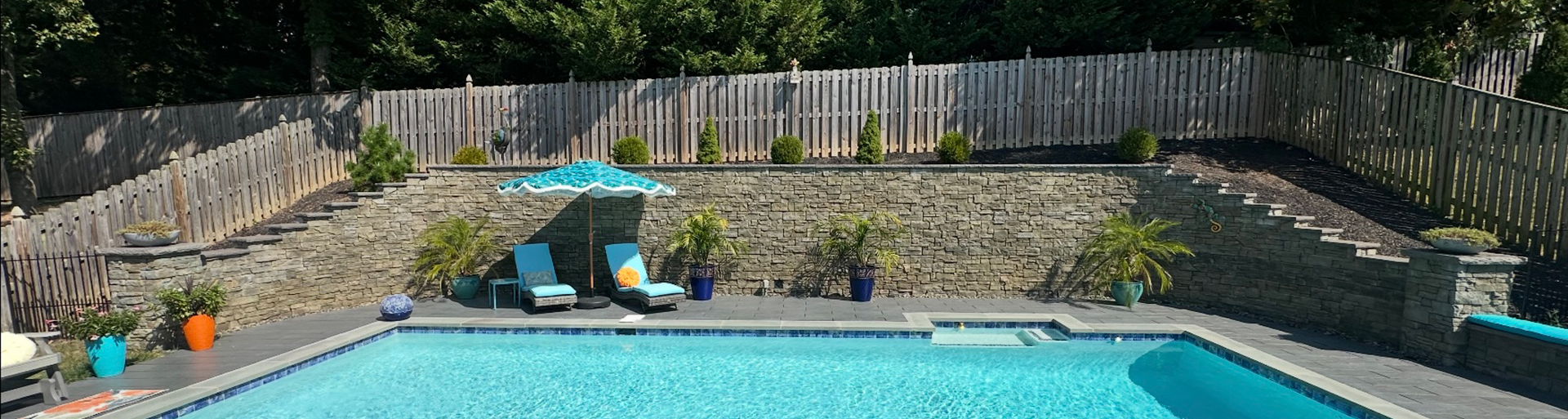
The best pool decks do more than just provide a safe walking surface around your pool. They create zones for different activities, guide traffic flow naturally, and make your entire backyard feel larger and more functional. After designing hundreds of pool areas across Maryland, we’ve learned which layouts work best for different property sizes and family needs.
Space planning starts with understanding how your family actually uses the pool area. Do you host large gatherings or prefer intimate family time? Do your kids need room to run around, or are you looking for a peaceful retreat? The answers shape every design decision.
Multi-Level Deck Designs
Multi-level pool decks solve two common problems – they create separate zones for different activities and make sloped yards more usable. We see this approach work especially well on the rolling terrain common in Baltimore and Howard counties.
Upper level areas work perfectly for dining and dry activities. Raising this section even 18 inches above the pool level keeps furniture and food away from splashing while maintaining easy conversation with people in the pool. We often integrate built-in seating along the edges of raised areas, which saves space and creates clean sight lines.
Pool-level areas focus on wet activities and easy pool access. This zone needs the most slip-resistant materials and the best drainage. We keep furniture minimal here – maybe a few lounge chairs and side tables that can handle getting wet.
Lower level areas work great for fire pits and evening gathering spots. If your property slopes away from the pool, we can create a sunken seating area that feels intimate while maintaining views of the pool action.
The key is connecting these levels smoothly. Wide, shallow steps work better than narrow, steep ones. We often design stepped seating areas that double as transitions between levels, maximizing both function and visual appeal.
Integrated Outdoor Living Features
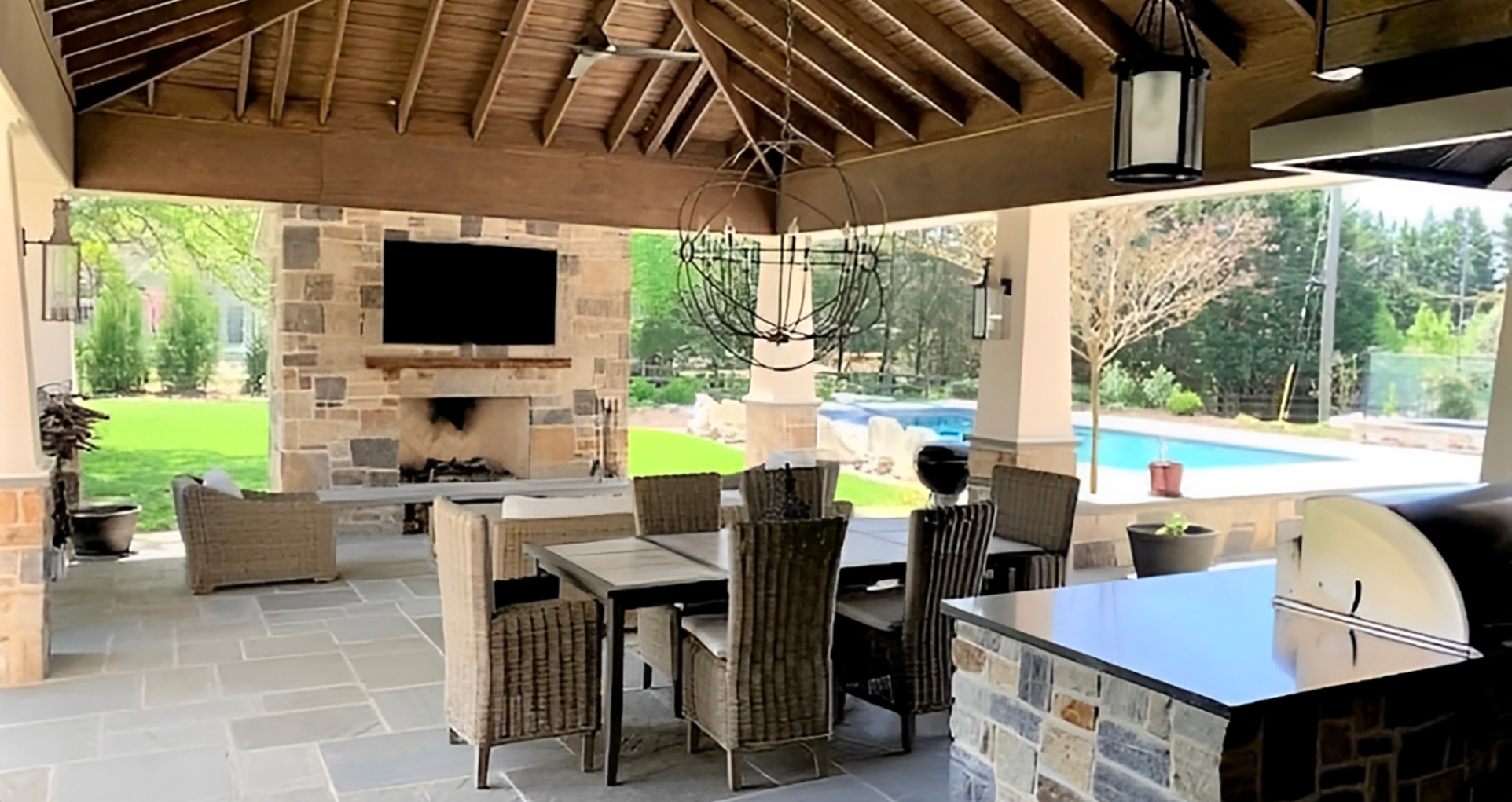 The most successful pool decks we design extend your indoor living space outdoors. Instead of just a deck around a pool, you get a complete outdoor room that works for dining, cooking, relaxing, and entertaining.
Outdoor kitchens integrated into pool deck designs create natural gathering spots. We position these areas where the cook can interact with pool activity while staying out of the splash zone. The kitchen becomes a serving station for pool parties and a comfortable spot for parents to supervise kids in the pool.
Fire features extend your pool season into spring and fall. A fire pit or fireplace positioned where it’s visible from the pool creates a natural gathering spot as the evening cools down. We design these areas with comfortable seating that encourages conversation.
Shade structures make pool decks usable during Maryland’s hot summer afternoons. Pergolas, pavilions, and even large umbrellas create comfortable spots for people who want to be near the pool activity without being in direct sun. We often integrate ceiling fans into covered areas to keep air moving on humid days.
Built-in seating maximizes space efficiency while creating a custom look. We design bench seating with storage underneath for pool toys and equipment. Corner seating areas create intimate conversation spots, while straight benches along pool edges provide extra seating during parties. When selecting furniture and accessories for your pool deck, focus on weather-resistant materials and cohesive design rather than cluttering the space with mismatched pieces[1].
Space Planning for Small vs. Large Areas
Pool deck design strategies change dramatically based on available space. Small yards require different approaches than large properties, but both can achieve beautiful, functional results.
Small pool areas benefit from clever space-saving techniques. We use built-in seating instead of furniture that takes up floor space. Vertical elements like pergolas and planters add visual interest without using much ground area. Light-colored materials make small spaces feel larger, while strategic lighting extends usability into evening hours.
Large pool areas need careful zoning to avoid feeling empty or disconnected. We create multiple activity areas – maybe a dining zone, a lounge zone, and a play area – connected by walkways and unified by consistent materials. Large spaces can handle bold design elements like water features or dramatic fire pits that would overwhelm smaller areas.
Traffic flow matters in both scenarios. We design clear paths between the house, pool, and different activity areas. Pool decks should guide people naturally without creating bottlenecks at popular spots like pool steps or outdoor kitchens.
The goal is making every square foot work hard while maintaining the relaxed feeling that makes pool areas special.
Cost and Planning Considerations
Pool deck projects require careful budget planning since costs vary dramatically based on material choices and design complexity. We’ve learned that homeowners who understand the full cost picture upfront make better decisions and end up happier with their finished projects.
The good news is that pool deck improvements typically return 70-80% of their cost in home value while providing years of enjoyment. But planning your budget realistically from the start prevents surprises and helps you prioritize features that matter most to your family.
Material Cost Comparisons
Concrete options offer the most budget-friendly starting point. Basic stamped concrete runs $14-18 per square foot installed, while decorative stamped patterns with multiple colors can reach $18-25 per square foot. Standard concrete pavers typically cost $25-35 per square foot, with premium styles reaching $35-45.
Natural stone represents a higher investment with lasting returns. Travertine installations typically run $35-45 per square foot, while flagstone and bluestone range from $35-50 per square foot depending on stone quality and pattern complexity. These costs include professional installation with proper base preparation.
Composite decking falls in the middle range at $25-35 per square foot for materials and installation. Premium lines like Azek cost more than basic Trex, but both require similar installation techniques and framing costs.
Additional features impact budgets significantly. Built-in seating adds $100-200 per linear foot. Pergolas range from $7,000-20,000 depending on size and materials. Outdoor kitchens start around $17,000 for basic setups and can reach $30,000+ for full-featured designs.
Installation Timeline Expectations
Most pool deck projects take 2-4 weeks from start to finish, but planning phases add time to the overall schedule. Simple deck replacements using similar materials move faster than complete redesigns with multiple features.
Design and permits typically require 2-3 weeks. This includes site measurements, design development, material selection, and obtaining necessary permits. Starting this process in winter or early spring means your deck is ready for summer entertaining.
Site preparation takes 1-3 days depending on existing conditions. Removing old decking, adjusting drainage, and preparing base materials all happen during this phase.
Installation varies by material choice. Concrete pours happen in one day but require curing time before use. Stone and paver installations progress section by section, allowing partial use during construction. Composite decking installations move quickly once framing is complete.
Weather delays are common in Maryland, especially during spring and fall when rain can interrupt concrete work or base preparation. Building buffer time into your schedule prevents disappointment.
Permit and Code Requirements
Most pool deck projects require building permits, especially when adding structures or changing drainage patterns. We handle permit applications and inspections as part of our service, but understanding requirements helps you plan realistic timelines.
Structural changes like adding elevated decks or pergolas always require permits. Pool safety codes also apply to deck design, including fence requirements and slip-resistant surface standards.
Drainage modifications need approval when projects change how water flows across your property. This commonly applies to pool deck projects since proper drainage prevents water damage and maintains safety.
Working with experienced contractors familiar with local codes prevents delays and costly mistakes. We maintain relationships with local building departments and understand specific requirements in Baltimore, Harford, Howard, and Anne Arundel counties.
Working with Pool Deck Contractors
Choosing the right contractor makes the difference between a pool deck that enhances your property for decades and one that becomes a constant source of problems. We’ve seen too many homeowners deal with drainage issues, cracking, and poor craftsmanship from contractors who don’t understand pool deck requirements.
Questions to Ask Potential Contractors
Start with the basics: licensing, insurance, and local references. Pool deck work requires specific skills, so ask to see examples of similar projects they’ve completed in the past two years.
Ask about their experience with your chosen materials. Installing travertine requires different techniques than composite decking. Request references from recent clients and actually call them – most homeowners are happy to share their experiences.
Discuss drainage solutions and how they’ll protect your pool equipment and foundation. Poor drainage causes expensive problems later, so contractors should have clear plans for water management.
Get detailed timelines and ask what happens if weather delays the project. Maryland’s unpredictable spring weather can stretch installations, so understand how delays are handled.
Design and Visualization Process
Quality contractors provide detailed design plans before starting work. Professional visualization software helps you see exactly how your finished pool deck will look before construction begins.
This process prevents costly changes during installation and helps you make confident material choices. You can see how different stone colors look with your home’s exterior or test furniture layouts in your space.
Expect multiple design revisions until the plan matches your vision perfectly. Good contractors encourage questions and modifications during the design phase rather than rushing toward construction.
What to Expect During Installation
Professional pool deck installations follow predictable phases: site preparation, base installation, material placement, and finishing details. Expect some noise and dust, but experienced crews minimize disruption to your daily routine.
Communication matters throughout the process. Your contractor should provide daily updates and address concerns immediately. Quality installations include proper cleanup and a walkthrough to explain maintenance requirements. Professional contractors provide written care instructions and warranty information for every project.
Why Choose Gibraltar Masonry and Landscaping for Your Pool Deck
 Like our namesake, the Rock of Gibraltar, we build pool decks that stand strong through Maryland’s challenging weather. Our masonry expertise sets us apart from general contractors – we understand how different materials perform around pools and which installation techniques prevent common problems like cracking and settling.
We hold certifications from the Interlocking Concrete Pavement Institute, National Concrete Masonry Association, Belgard, and Techo-Bloc. These credentials reflect our commitment to staying current with best practices and material innovations.
Our 5-year warranty on hardscape installations covers both materials and workmanship. We stand behind every project because we use proven techniques and quality materials designed for Maryland’s climate.
Recent pool deck projects include a multi-level travertine installation in Baltimore County that solved drainage issues while creating separate entertaining zones, and a composite deck renovation in Anne Arundel County that integrated an outdoor kitchen and fire pit area.
We handle everything in-house: design, permits, installation, and follow-up maintenance guidance. This complete approach means clear communication and accountability from start to finish.
Transform Your Pool Area Today
Your pool deck should be a place your family loves spending time, not something you avoid looking at. Whether you’re dealing with cracked concrete, outdated materials, or a deck that doesn’t match your lifestyle, the right renovation can transform your entire backyard experience.
Ready to see your pool deck ideas come to life? Schedule your free design consultation today. We’ll discuss your vision, assess your space, and show you 3D renderings of your new pool deck before making any commitments.
Call 443-417-4032 or fill out our contact form to get started. We serve homeowners throughout Baltimore, Harford, Howard, and Anne Arundel counties, plus Southern Pennsylvania.
Don’t spend another summer looking at a pool deck that doesn’t match your vision. Let’s create the outdoor oasis your family deserves.
References:
[1] https://www.businessinsider.com/things-to-get-rid-of-outdoor-space-interior-designers-gardeners